For decades, the Indian fragrance market operated on a single, slightly embarrassing premise: copy what works in Paris, shrink the price, and sell it to people who don’t know better. The result? Shelves lined with “inspired by” bottles. Fragrances that come close to something great — but never quite get there.
The gap between an original fragrance and its dupe isn’t just price. It’s intention.
A master perfumer spending eight months finding the precise tension between bergamot and vetiver isn’t creating a formula — they’re making a decision about what something should feel like. When you copy that without understanding it, you don’t replicate the feeling. You just approximate the smell.
And India, with its extraordinary sensory landscape, deserves better than approximations.
What “Niche” Actually Means in Perfumery
The word “niche” has been diluted by overuse. Every brand with a vintage label and a price tag above ₹2,000 now claims it.
The original meaning was precise: niche perfumes are made for art, not volume. They’re made for people who understand fragrance as a craft — who read the notes on a bottle the way a reader reads a blurb, knowing it will tell them something true about what’s inside.
Niche fragrances are defined by original formulations (not copies), higher oil concentrations, a story behind every bottle, and small-batch production that protects both quality and rarity.
The Indian market is only now building this category with real conviction.
The Problem With Dupe Culture — And Why It Hurts You Specifically
When someone says “this smells exactly like Sauvage for ₹499,” what they’re actually saying is: I want to smell like someone else’s idea of luxury, at a cost I can justify.
There’s nothing wrong with wanting to smell good on a budget. But here’s what the dupe economy costs you that nobody talks about: your signature.
Your scent is the thing that lingers after you leave the room. It’s what someone remembers about you before they remember your name. And if your signature fragrance is a copy of something thousands of other people are wearing — are you really wearing a signature?
The best thing that’s happened for Indian fragrance consumers is the emergence of brands building original olfactory identities rooted in Indian experience. Not in some perfumer’s fantasy of what India should smell like from an office in Paris.
What Indian Fragrance DNA Actually Smells Like
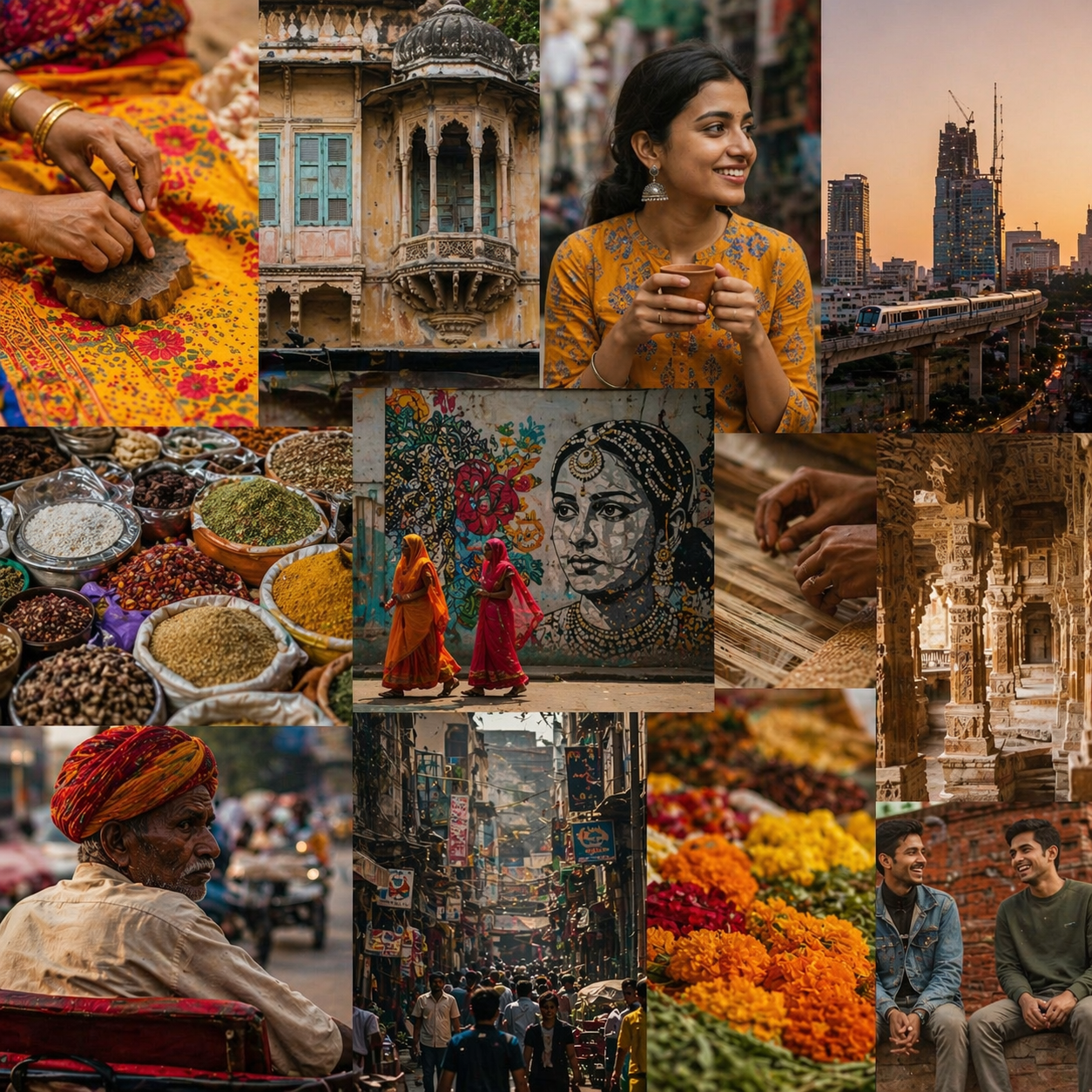
India is not a single scent. It’s a layered, contradictory, overwhelming collection of them.
The cold pine air of an early Manali morning. The incense smoke threading through a Varanasi corridor. The brackish sweetness of Kerala’s backwaters. The industrial romance of a Bandra café on a Sunday — coffee, bread, salt air, old stone.
These are not generic “woody-oriental” blends. They’re specific. They carry geography. They have memory inside them.
When a fragrance is built from lived experience — when the person who made it has actually walked those lanes, breathed that air, sat with those smells — it carries something a dupe never can. Truth.
How to Find the Right Original Indian Fragrance for You
Start with the story. Before the notes, read what the fragrance is supposed to evoke. Does it sound like somewhere you’ve been — or want to go?
Check the concentration. Original niche fragrances are almost always EDP or Extrait (15% and above). Anything lower is a red flag in the niche space.
Wear it for a full day. Niche fragrances are built with dry-down in mind. The opening may surprise you — give it three hours. What it becomes on your skin after that is the real fragrance.
Don’t compare it to a reference. The entire point of an original formulation is that it doesn’t sound like anything you’ve smelled before. Let it be itself.
India’s Scent Story Is Just Beginning
The next decade in Indian perfumery is going to be remarkable. As consumers get more sophisticated and more original Indian voices enter the space — the country that gave the world oud, sandalwood, jasmine, and vetiver will finally have a fragrance industry that honours those materials with original thought.
You can be part of that story now.
The early adopters always smell the best.
"The Bombay Lab is an original Indian fragrance house. No dupes. No shortcuts. Every bottle, a place. Every spray, a story."